
Books by Kevin Wanzer
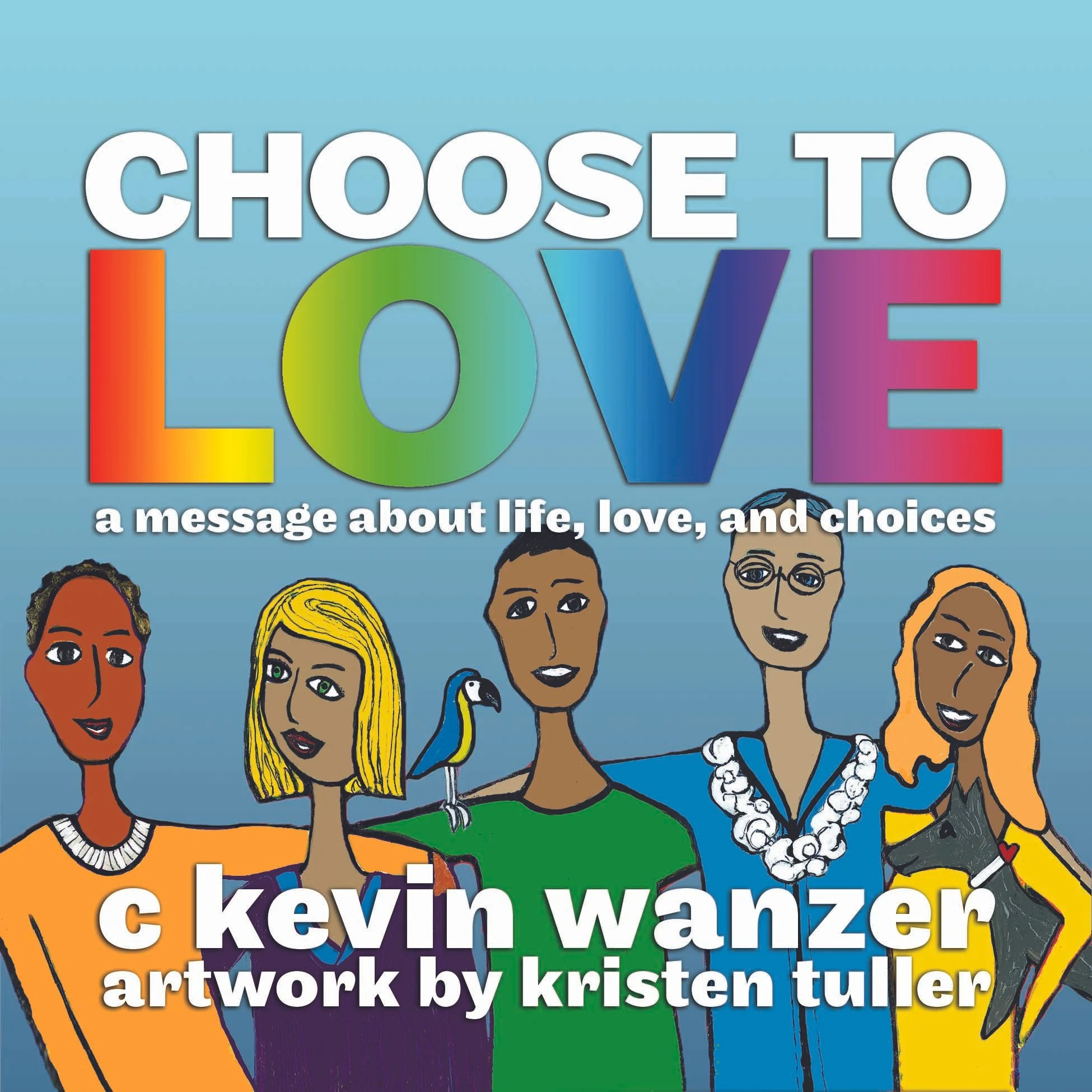
Choose to Love
a message about life, love, and choices
by Kevin Wanzer
A poem about the only choices that really matter.
In 1992, Kevin woke in the middle of the night in a Columbus, Georgia hotel room and reached for the notepad on the nightstand. The words of a poem had just visited him in a dream, and he wrote them all down.
He kept that poem to himself for fifteen years.
When he finally published Choose to Love in 2005, he dedicated it to his first adopted child. The message, at the heart of the book and at the heart of everything Kevin does on stage, is deceptively simple: we cannot control a lot of things in the world, but we can always choose how we treat each other.
Audiences have been inspired by it ever since. A few dozen lines that take two minutes to read. The kind of thing you'll think about much longer. Parents tell Kevin they read it to their kids all the time because it’s among their children’s favorites.
Look closely at every illustration. Each one hides at least one heart.
The current edition is multilingual — every line appears in English, Spanish, and Arabic, together on each page.
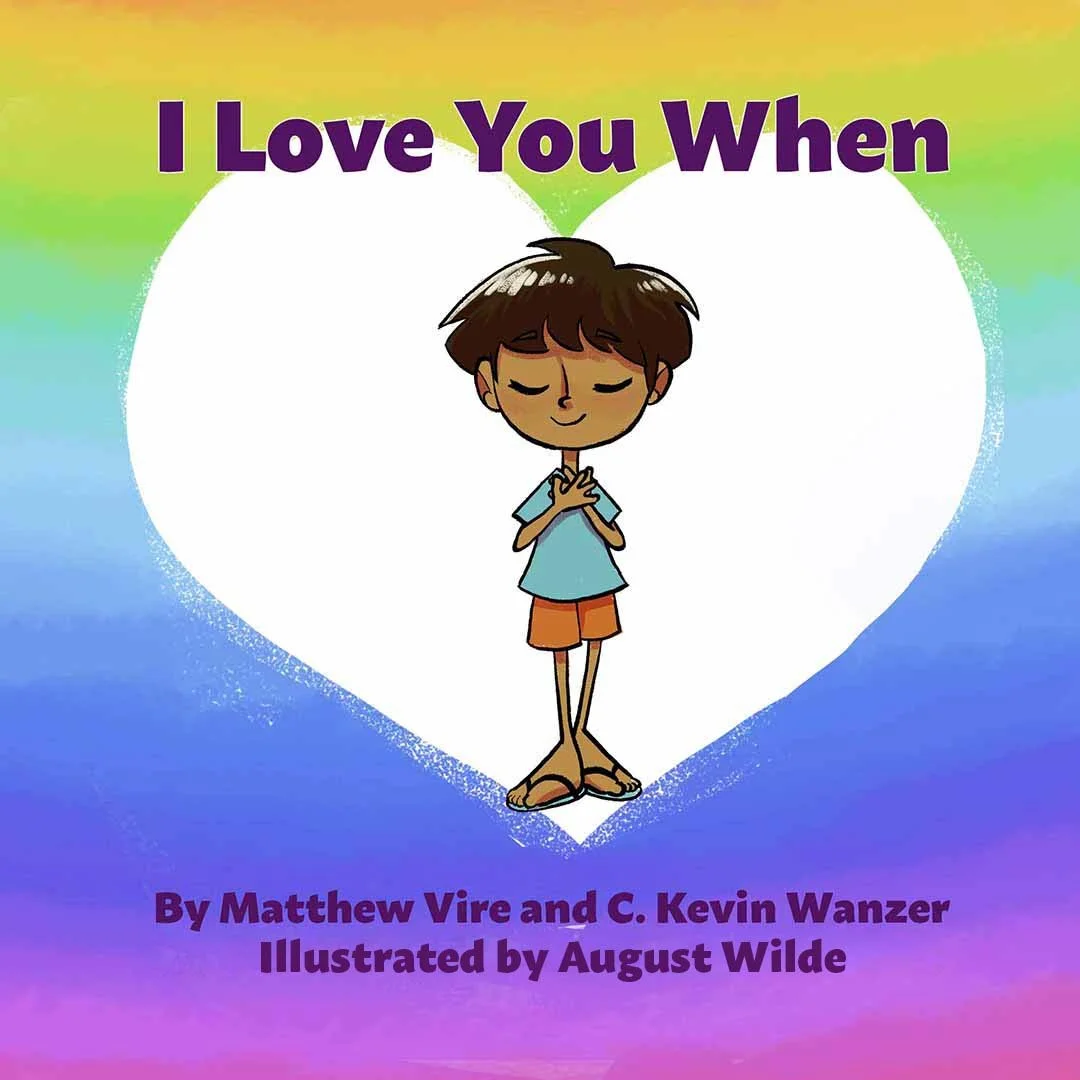
I Love You When
by Matthew Vire and C. Kevin Wanzer
A bedtime story about unconditional love, written for a child and felt by everyone who reads it.
I Love You When began as a promise, written to reassure a soon-to-be-adopted child that he is always loved, no matter what. It has since found its way into the hands of parents, grandparents, teachers, and anyone who has ever needed to hear or say those words without conditions attached.
It's also become a quiet staple in the adoption and foster care world. Caseworkers, foster parents, therapists, and counselors reach for it often as a gift, a read-aloud, an adoption-day gift, or simply something to have on hand for the children they work with.
Illustrator August Wilde designed the parent and child characters to be deliberately gender-ambiguous, so that more children and families might see themselves on every page. The text is set in OpenDyslexic, a font designed to improve readability for people with dyslexia.
It’s simple, touching, rhythmic, and powerful—a message for adults and children alike.